Highlighting Jackie Robinson
You can’t mention Black excellence in sports without paying homage to the first Black Major League Baseball player Jackie Robinson.
%22%2F%3E%0A%3Cline%20x1%3D%22118%22%20y1%3D%220%22%20x2%3D%22118%22%20y2%3D%221024%22%20stroke%3D%22%23ffffff%22%20stroke-opacity%3D%220.03%22%20stroke-width%3D%221%22%2F%3E%3Cline%20x1%3D%22236%22%20y1%3D%220%22%20x2%3D%22236%22%20y2%3D%221024%22%20stroke%3D%22%23ffffff%22%20stroke-opacity%3D%220.03%22%20stroke-width%3D%221%22%2F%3E%3Cline%20x1%3D%22354%22%20y1%3D%220%22%20x2%3D%22354%22%20y2%3D%221024%22%20stroke%3D%22%23ffffff%22%20stroke-opacity%3D%220.03%22%20stroke-width%3D%221%22%2F%3E%3Cline%20x1%3D%22473%22%20y1%3D%220%22%20x2%3D%22473%22%20y2%3D%221024%22%20stroke%3D%22%23ffffff%22%20stroke-opacity%3D%220.03%22%20stroke-width%3D%221%22%2F%3E%3Cline%20x1%3D%22591%22%20y1%3D%220%22%20x2%3D%22591%22%20y2%3D%221024%22%20stroke%3D%22%23ffffff%22%20stroke-opacity%3D%220.03%22%20stroke-width%3D%221%22%2F%3E%3Cline%20x1%3D%22709%22%20y1%3D%220%22%20x2%3D%22709%22%20y2%3D%221024%22%20stroke%3D%22%23ffffff%22%20stroke-opacity%3D%220.03%22%20stroke-width%3D%221%22%2F%3E%3Cline%20x1%3D%22827%22%20y1%3D%220%22%20x2%3D%22827%22%20y2%3D%221024%22%20stroke%3D%22%23ffffff%22%20stroke-opacity%3D%220.03%22%20stroke-width%3D%221%22%2F%3E%3Cline%20x1%3D%22945%22%20y1%3D%220%22%20x2%3D%22945%22%20y2%3D%221024%22%20stroke%3D%22%23ffffff%22%20stroke-opacity%3D%220.03%22%20stroke-width%3D%221%22%2F%3E%3Cline%20x1%3D%221063%22%20y1%3D%220%22%20x2%3D%221063%22%20y2%3D%221024%22%20stroke%3D%22%23ffffff%22%20stroke-opacity%3D%220.03%22%20stroke-width%3D%221%22%2F%3E%3Cline%20x1%3D%221182%22%20y1%3D%220%22%20x2%3D%221182%22%20y2%3D%221024%22%20stroke%3D%22%23ffffff%22%20stroke-opacity%3D%220.03%22%20stroke-width%3D%221%22%2F%3E%3Cline%20x1%3D%221300%22%20y1%3D%220%22%20x2%3D%221300%22%20y2%3D%221024%22%20stroke%3D%22%23ffffff%22%20stroke-opacity%3D%220.03%22%20stroke-width%3D%221%22%2F%3E%3Cline%20x1%3D%221418%22%20y1%3D%220%22%20x2%3D%221418%22%20y2%3D%221024%22%20stroke%3D%22%23ffffff%22%20stroke-opacity%3D%220.03%22%20stroke-width%3D%221%22%2F%3E%0A%3Crect%20width%3D%221536%22%20height%3D%221024%22%20fill%3D%22url(%23glow)%22%2F%3E%0A%3Cpolygon%20points%3D%220%2C1024%200%2C714%2067%2C710%20134%2C702%20200%2C684%20267%2C671%20334%2C655%20401%2C667%20467%2C681%20534%2C698%20601%2C697%20668%2C693%20735%2C699%20801%2C709%20868%2C722%20935%2C744%201002%2C724%201069%2C729%201135%2C715%201202%2C696%201269%2C695%201336%2C690%201402%2C663%201469%2C678%201536%2C678%201536%2C1024%22%20fill%3D%22url(%23fill)%22%2F%3E%0A%3Cpolyline%20points%3D%220%2C714%2067%2C710%20134%2C702%20200%2C684%20267%2C671%20334%2C655%20401%2C667%20467%2C681%20534%2C698%20601%2C697%20668%2C693%20735%2C699%20801%2C709%20868%2C722%20935%2C744%201002%2C724%201069%2C729%201135%2C715%201202%2C696%201269%2C695%201336%2C690%201402%2C663%201469%2C678%201536%2C678%22%20fill%3D%22none%22%20stroke%3D%22%235A8FFF%22%20stroke-opacity%3D%220.9%22%20stroke-width%3D%223%22%20stroke-linejoin%3D%22round%22%20stroke-linecap%3D%22round%22%2F%3E%0A%3C%2Fsvg%3E)
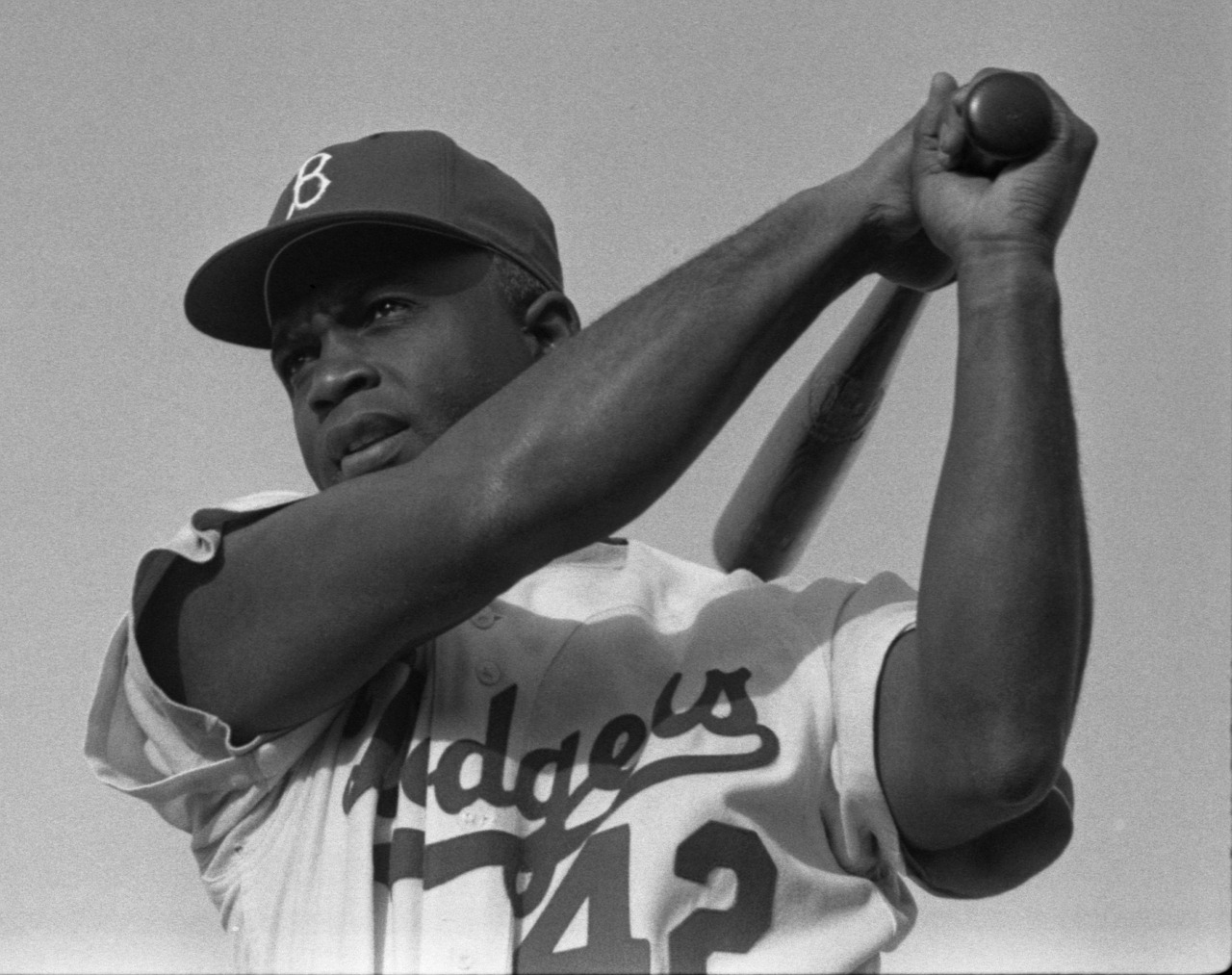
You can’t mention Black excellence in sports without paying homage to the first Black Major League Baseball player Jackie Robinson. After breaking the infamous MLB “color barrier,” Robinson shortly earned Rookie of the Year and led the Dodgers to six pennants and a World Championship within his 10-year career with the franchise.
And while the legend is now heavily celebrated with his own Holiday—April 15 to commemorate the date of his MLB debut—it’s evident this overpour of love and admiration was not always the case. Throughout his baseball career, endeavors as a businessman and later as an activist, Robinson faced immense injustice fueled by racism that while hard to endure, further motivated him to change history as everyone knew it both inside and outside the field.
A part of his early sports career fans often like to celebrate, is Robinson’s “turn the other cheek’ mentality, specifically when dealing with prejudice and racism within the MLB. When scouted in his time in the Negro League’s Kansas City Monarchs in 1945, Brooklyn Dodgers executive Branch Rickey explained to Robinson that he needed a person “ “with guts enough not to fight back.”
It’s important that we acknowledge that while Robinson wouldn’t be the immortalized icon he is today without acceptance of the mistreatment given the circumstances, having to adapt in order to become more palatable for the hostile white fans and even his teammates was also a survival and defense mechanism. This mentality was necessary, especially when after joining the Dodgers, he continuously received death threats and heard racist obscenities while on the field.
Of course it’s nicely worded to say you need guts to not fight back, but with racial equity involved, fighting back was necessary. And 28-year old Robinson fought the prejudice and critics in the best way he could given this opportunity.
It didn’t take long for Robinson to begin turning the negative attention into a positive as best as he could; in his first year in the majors, Robinson earned National League’s Rookie of the Year. The rising star became National League’s MVP and league batting champ two years later.
But regardless of his impressive stats after leading the league in hits (with a .342 average), capturing the most stolen bases and the higher number of RBI’s (124), Jim Crow laws still prevented Robinson from fully experiencing the MLB star experience as he was unable to stay in the same hotels and eat at the same restaurants as his teammates.
After bringing so much success to the team and displaying elite skill, you’d think the MLB and his teammates in general would demand Robinson have a seat at the same table. However, through unrelenting racist struggles, his performance continued to peak as an All Star every year from 1949-1954.
Though Robinson played a significant role leading the Dodgers to defeat the New York Yankees in the 1956 World Series, he retired the following year instead of following the franchise to Los Angeles. He then dedicated his time to civil rights advocacy; joining the NAACP and collaborating with organizations like SCLC, raising funds for activism and activists at the time.
Robinson also took to writing a column for the New York Post to support the Civil Rights Movement, though he often disagreed with other activists like Malcom X. After his often-unpleasant experience in the MLB dealing with insults, yet still becoming a celebrated player, Robinson argued no violence was necessary to receive acceptance from whites.
And while Black athletes can now occupy the same spaces as their white teammates and there’s no longer much outrage when Black athletes are scouted by big teams in any major sport, Robinson’s experience encourages modern-day athletes to not let their athlete identity take over their urge to advocate for change and speak up against injustice.
Like the case with Robinson in his prime, Black athletes today are often only glamorized for their spectacular skills and seen only as a number on a jersey. Whenever they speak up about a racial issues, they’re criticized and told to just focus on playing the sports that entertain the masses.
If you love what an athlete does for your favorite team, you must also acknowledge them as people outside their uniforms. People with struggles and goals much bigger than whatever sport they’re associated with.
You must try to support them in efforts to advocate for causes which affect their identities outside their sport. Just like Robinson should’ve been universally loved for his accomplishments without his skin color being the “but” of the conversation.
An athlete's advocacy should be as celebrated as their excellence in their respective sports and not shy away from using their platforms to stand for movements as Robinson did during his time alive.
Robinson was elected to the Baseball Hall of Fame in 1962, the very first year he was eligible for election. He died October 24, 1972, at the early age of 53, in Stamford, Connecticut. His story and his historical accomplishments, however, will live forever.